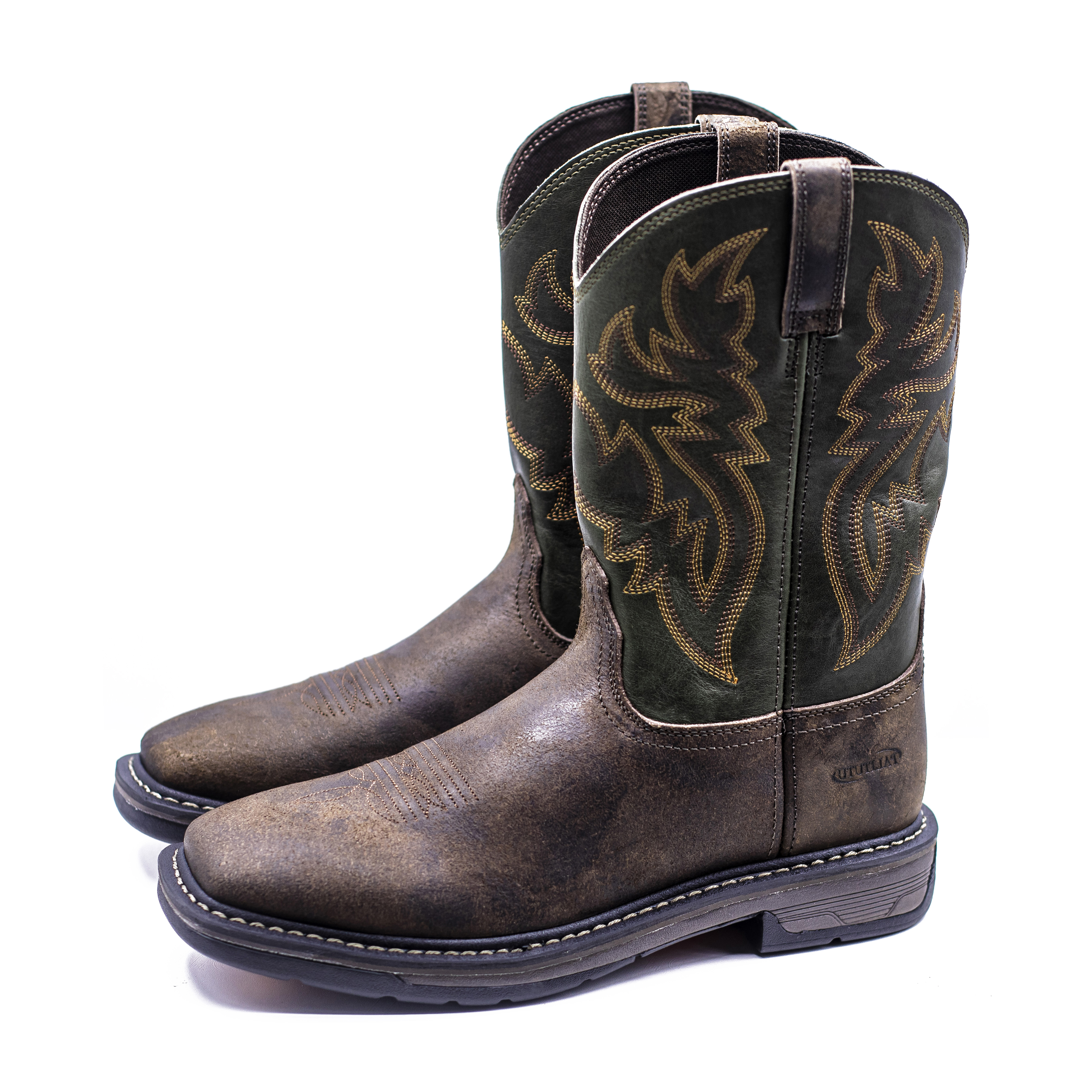
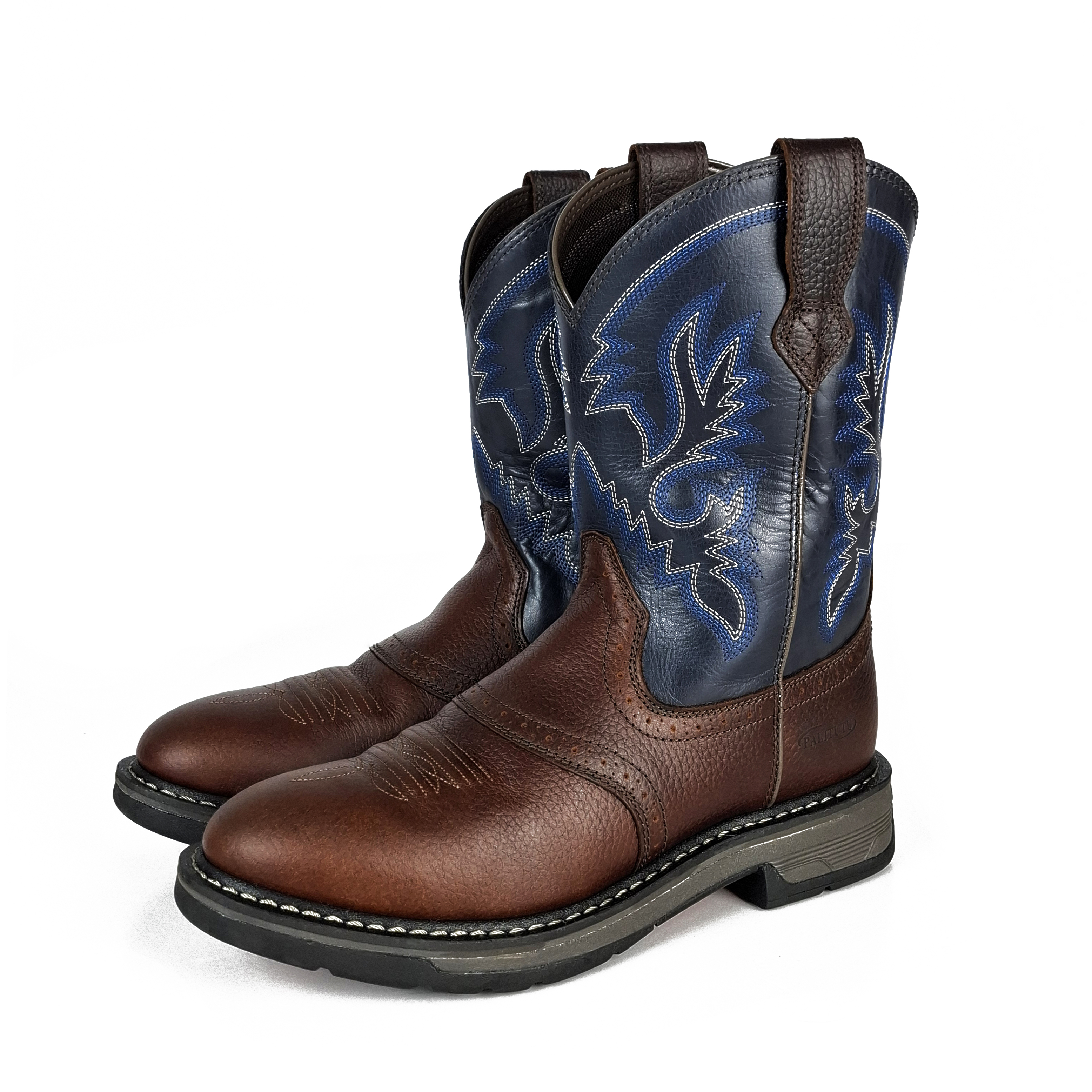
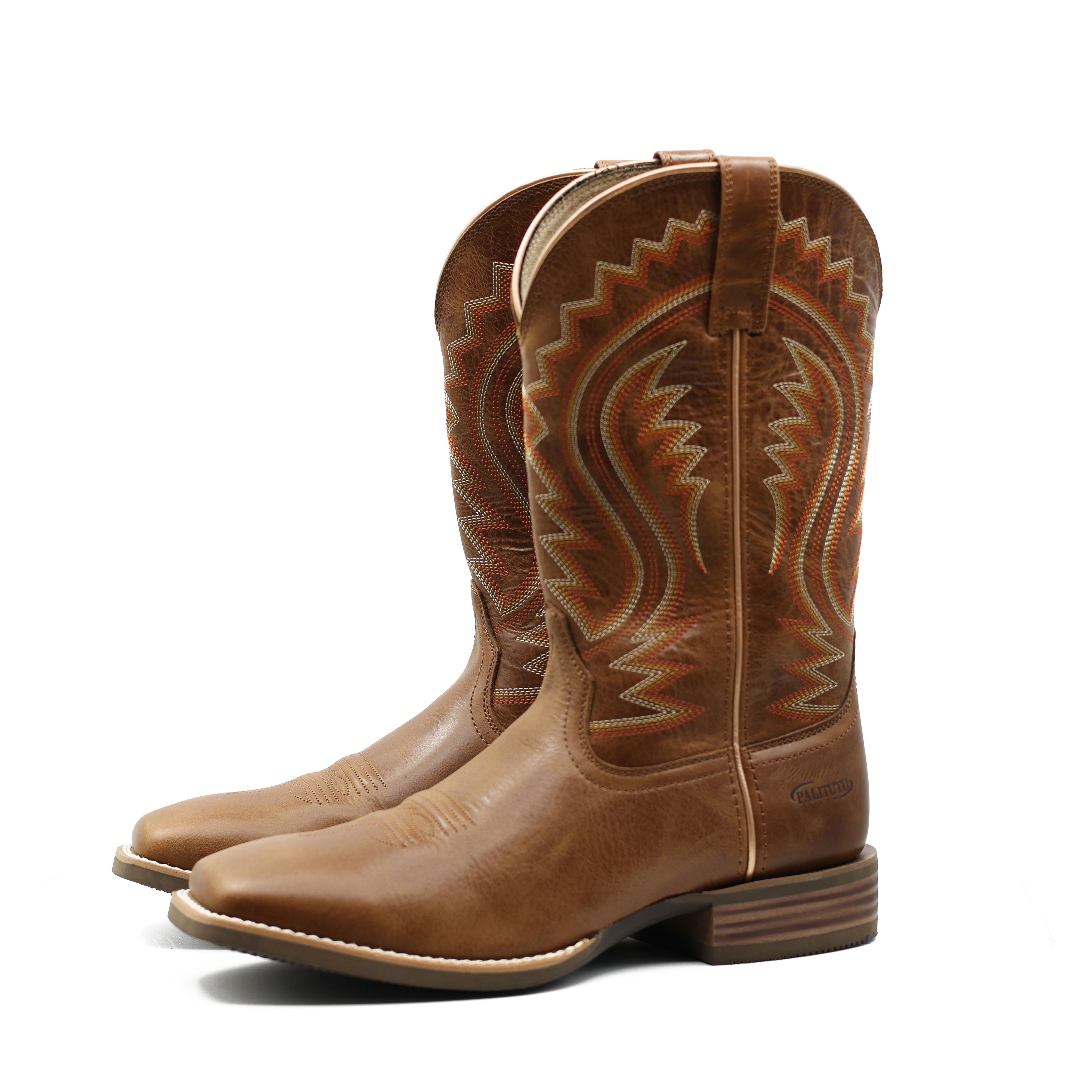
Color can play a structural role in
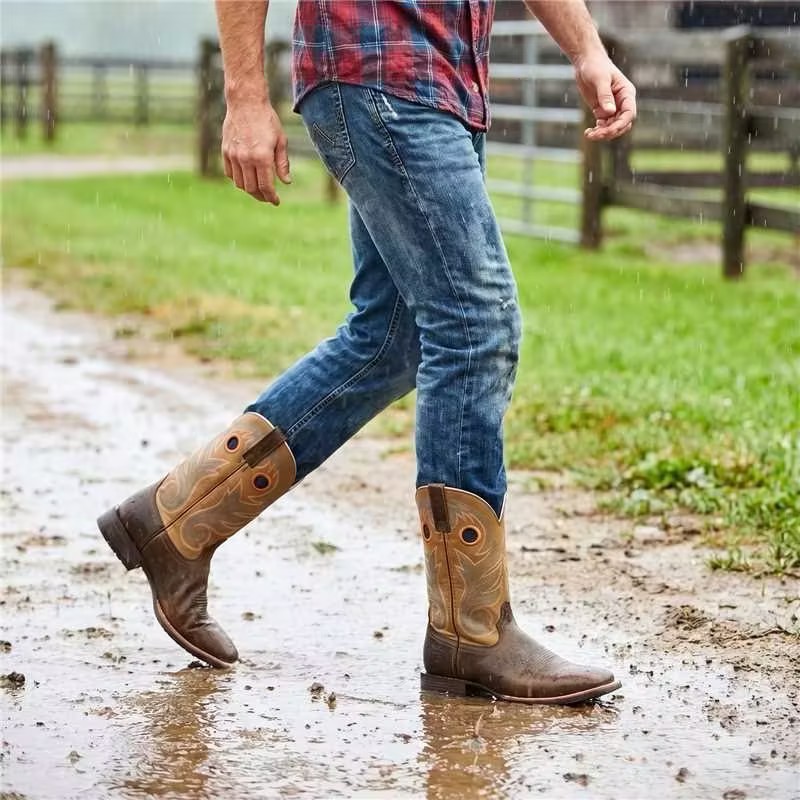
Western boot design. Because the shaft provides a large vertical surface and the vamp creates a strong horizontal foundation, dividing these areas into different tones can change how the entire boot is perceived.
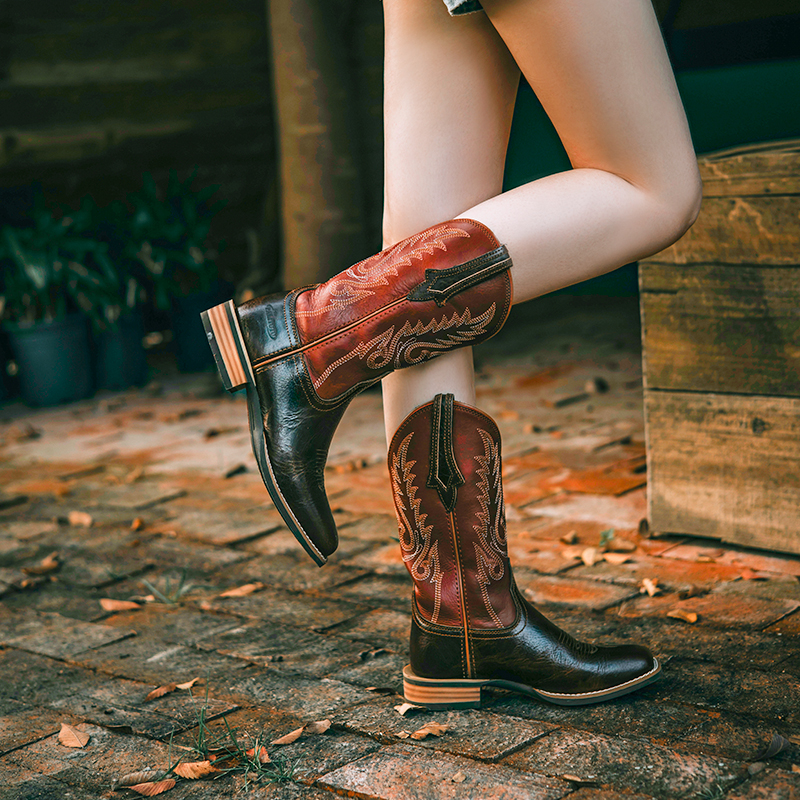
This women’s style combines a dark vamp with a warm reddish-brown shaft. The darker lower section gives definition to the toe and instep, while the warmer shaft creates a contrasting field for the embroidery. The transition is supported by panel edges, stitching, and piping rather than relying on color alone.
Developing this type of boot requires careful attention to proportion. If the darker section extends too far upward, the shaft may appear shorter. If the upper color dominates too much, the vamp can lose visual weight. Designers therefore review the relationship between shaft height, panel shape, toe profile, and heel construction before confirming the final color placement.
Embroidery thread also affects the balance. Light stitches can bring clarity to curved motifs, while darker outlines help connect the artwork to the surrounding leather. These choices are tested on physical samples because leather changes in appearance after stitching, shaping, and finishing.
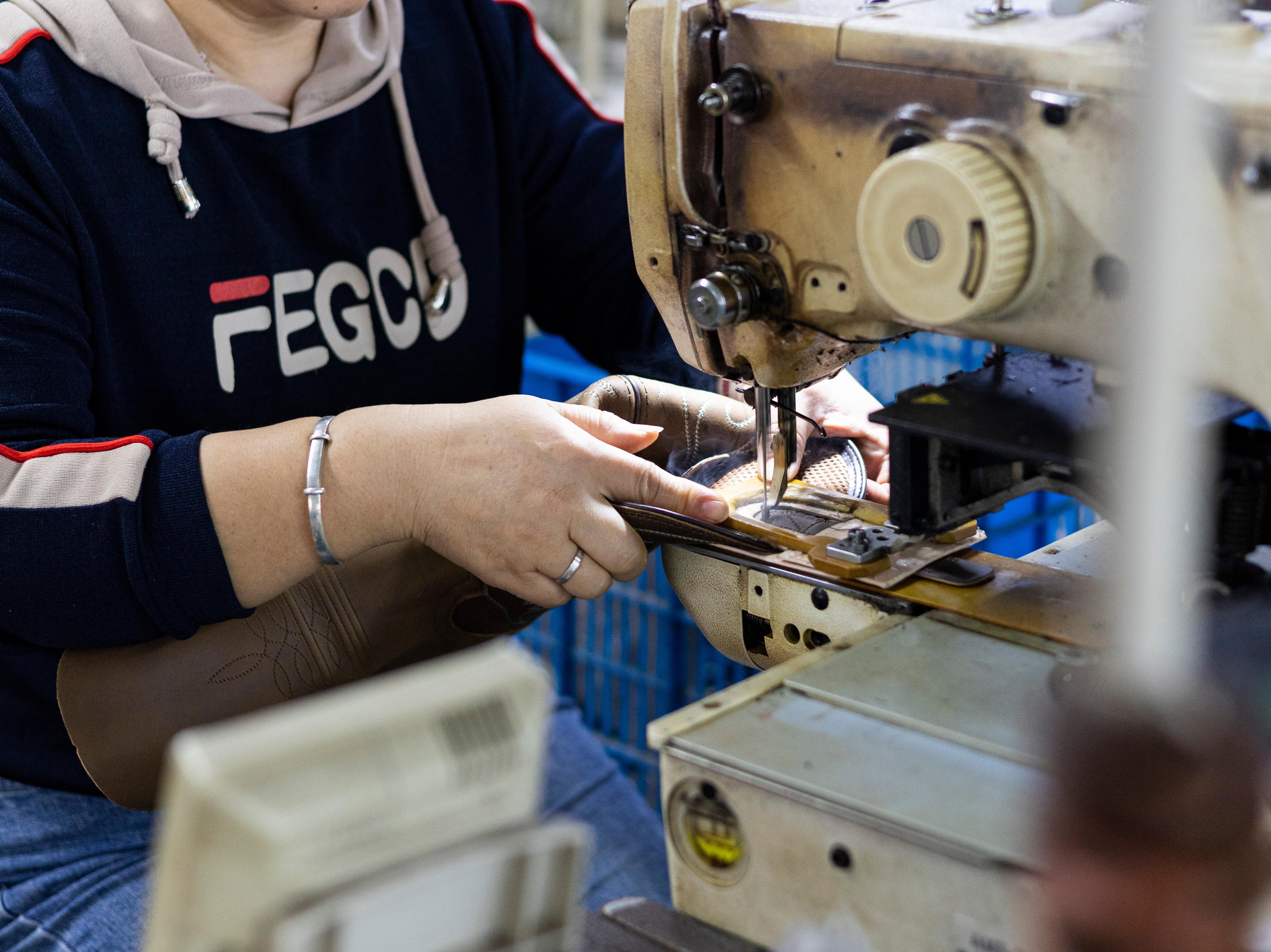
At Jiangsu Yibei Industry Co., Ltd., two-tone development is coordinated across material selection, pattern making, embroidery, and sample construction. The team reviews how each color behaves on the finished form rather than evaluating isolated leather swatches.
A successful two-tone boot uses color to guide the eye through the design. The goal is not simply to create contrast, but to give each part of the boot a clear visual purpose while maintaining a coherent Western character.
 +1(313)896-6743
 New technology companies

 Follow the official account
 Follow the official account