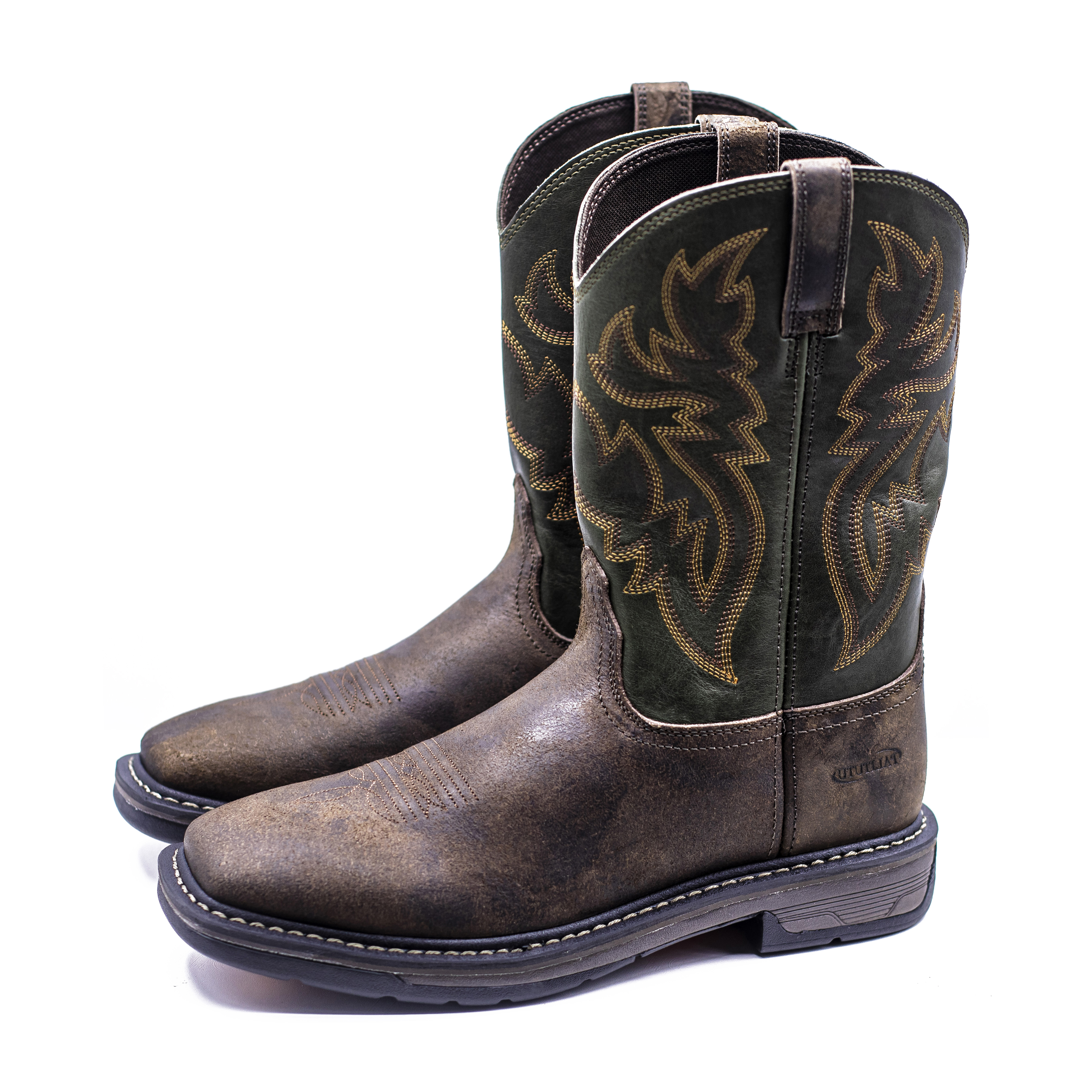
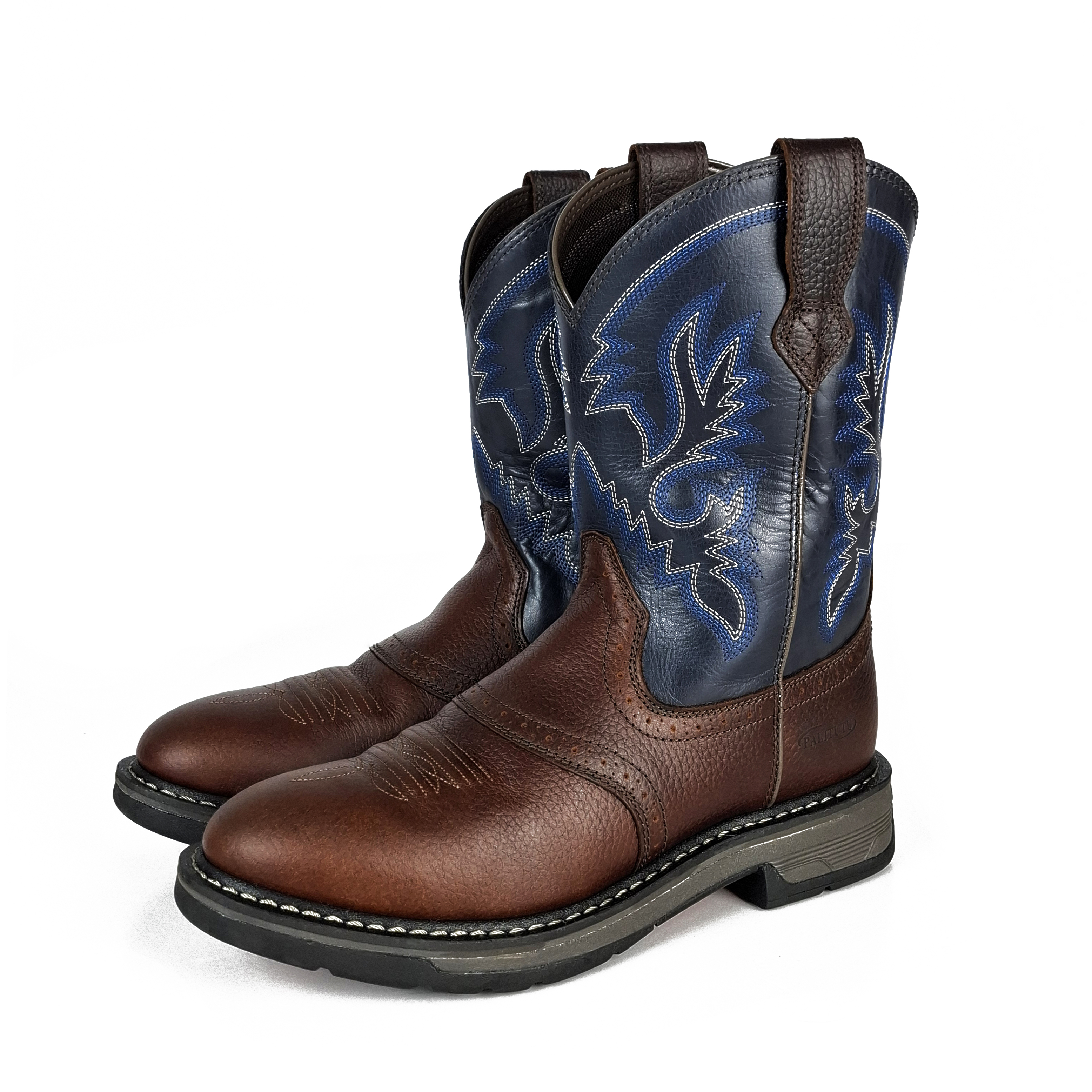
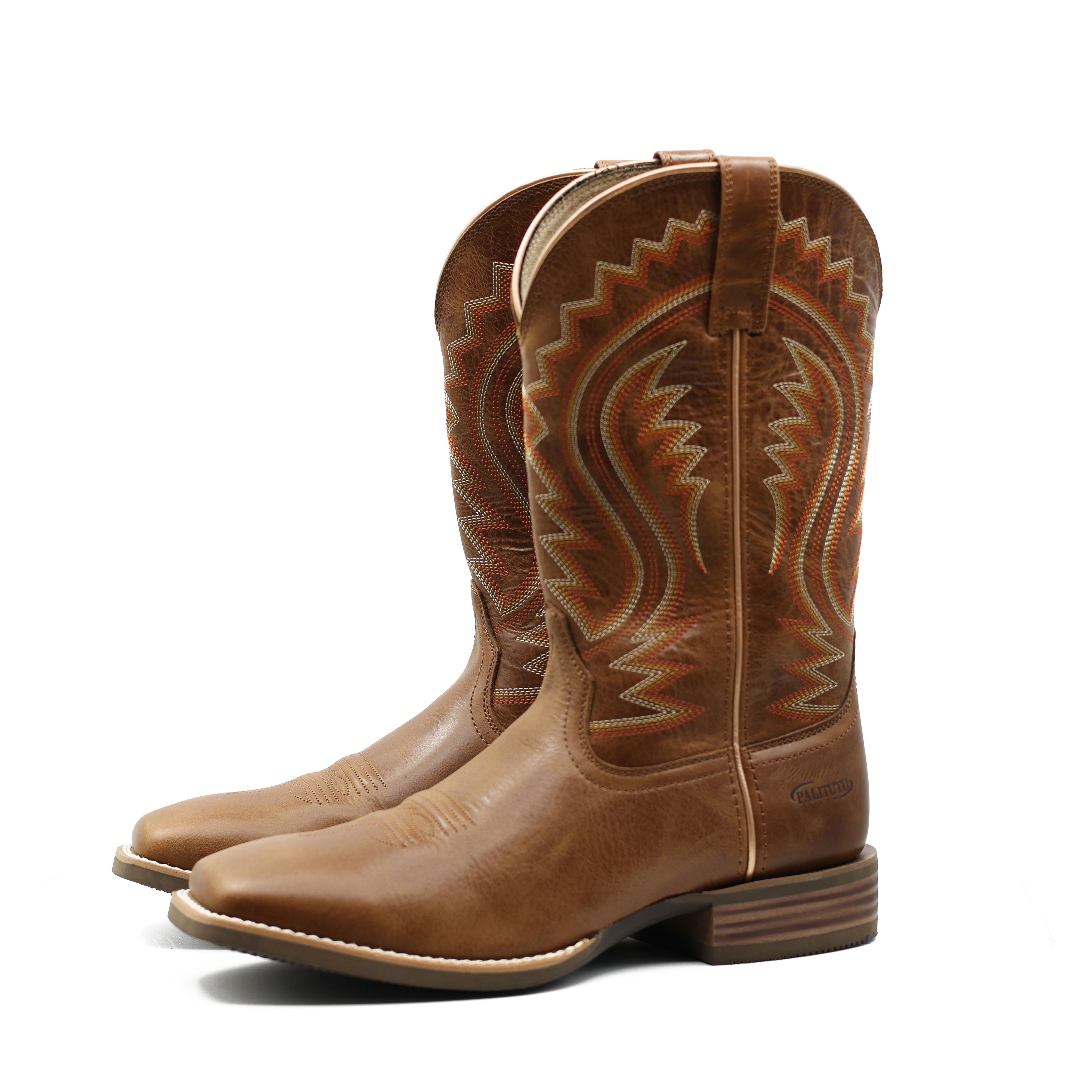
In cowboy boot manufacturing, leather inspection is an important step before cutting and assembly. Different types of leather may vary in thickness, texture, flexibility, and surface condition, which can influence later production stages and the overall structure of the boot.
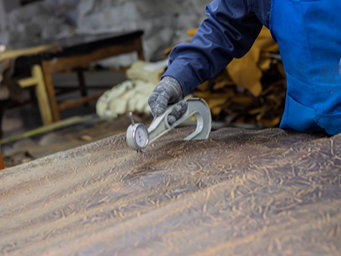
Before production begins, leather materials are checked according to product requirements and intended construction methods. Workers measure thickness, observe surface consistency, and review material flexibility to help coordinate leather selection with different boot parts.
For cowboy boots, different areas of the boot may require different leather characteristics. Shaft sections, vamps, pull straps, and lining materials are often arranged according to flexibility, shape retention, and stitching requirements.
During inspection, materials are also reviewed for cutting layout and usage planning. This process helps reduce unnecessary material variation during production and supports consistency between sample development and bulk manufacturing.
Leather inspection is connected to multiple later stages, including cutting, stitching, lasting, and finishing. Through coordination between material preparation and production planning, the manufacturing process can proceed with clearer structure and workflow arrangement.
 +1(313)896-6743
 New technology companies


 Follow the official account
 Follow the official account