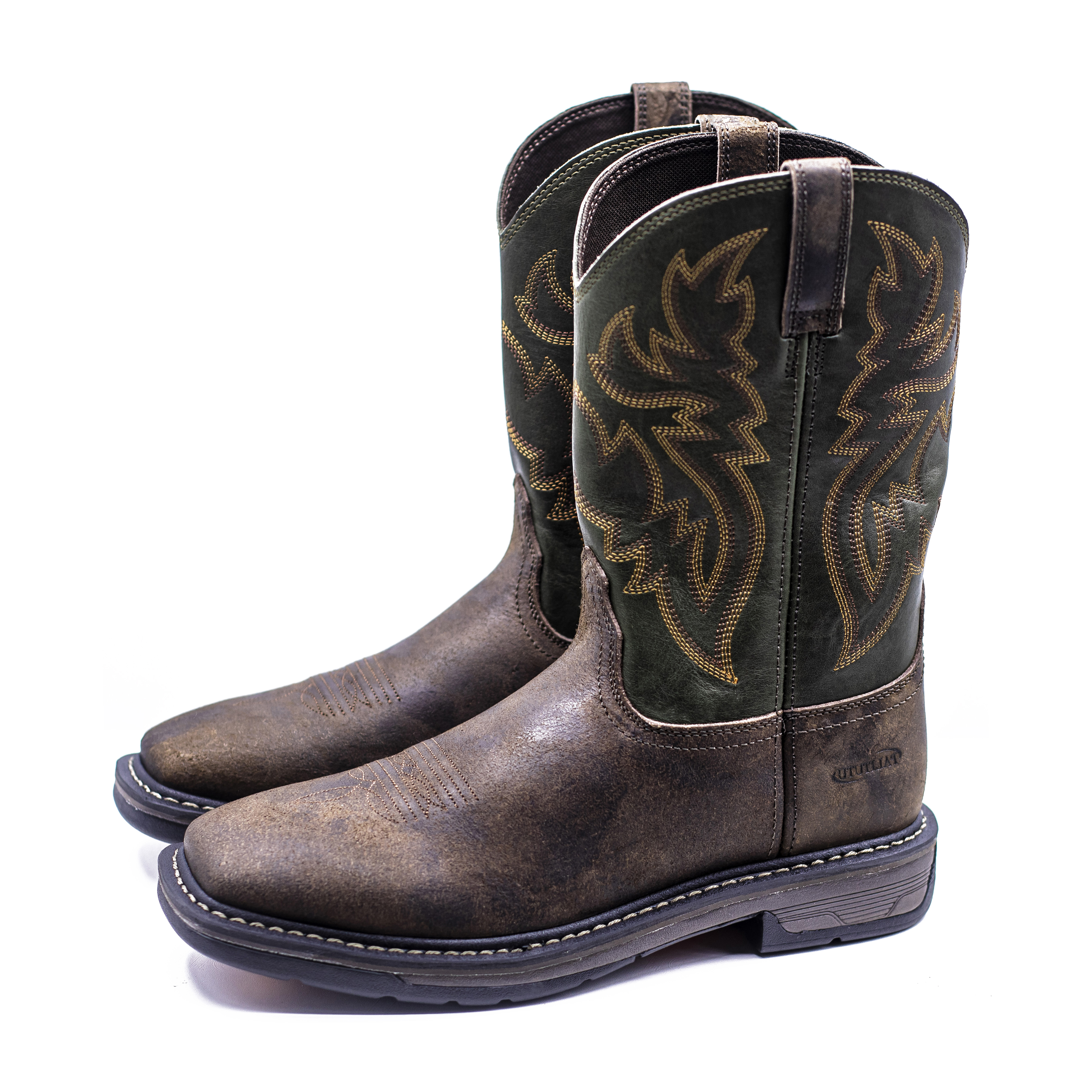
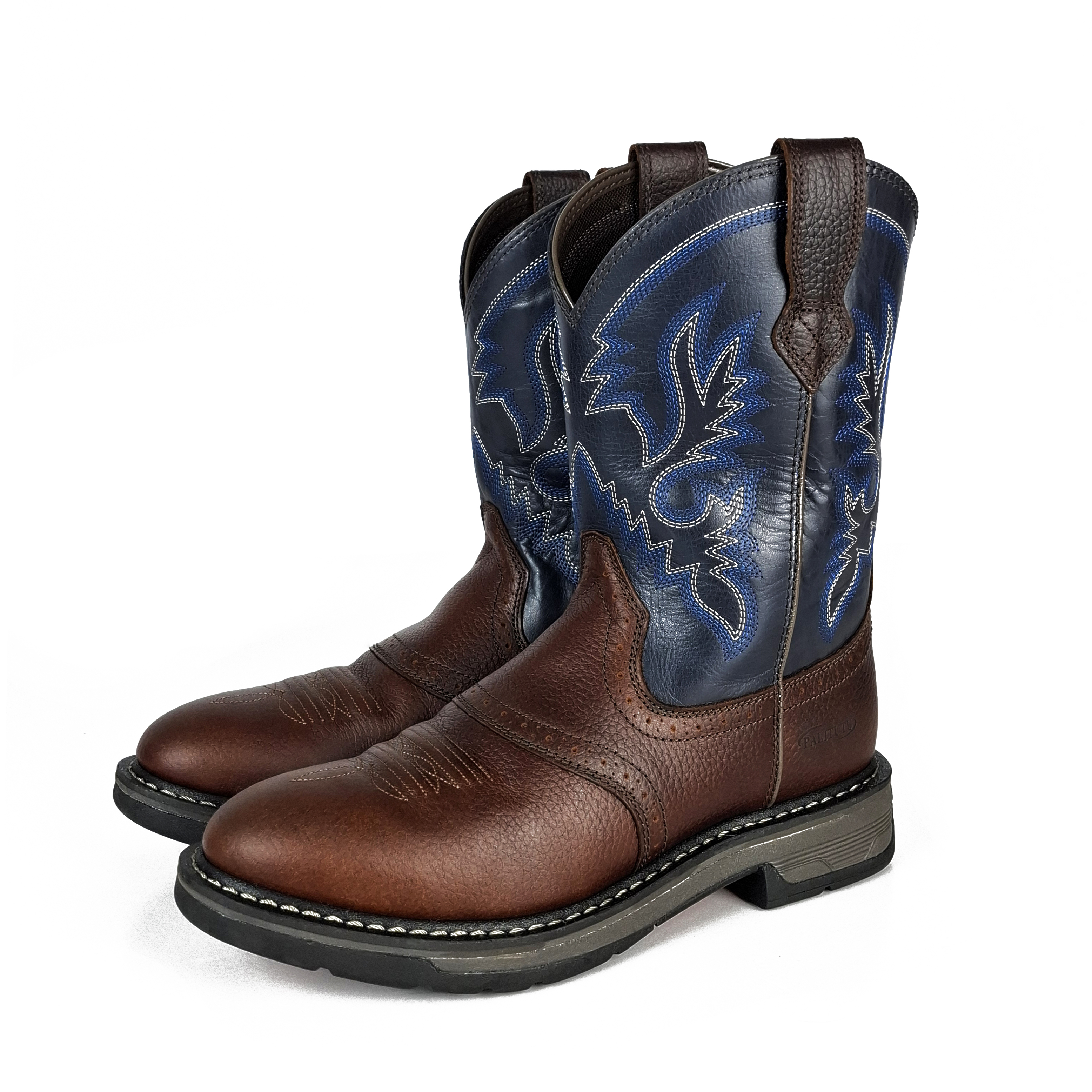
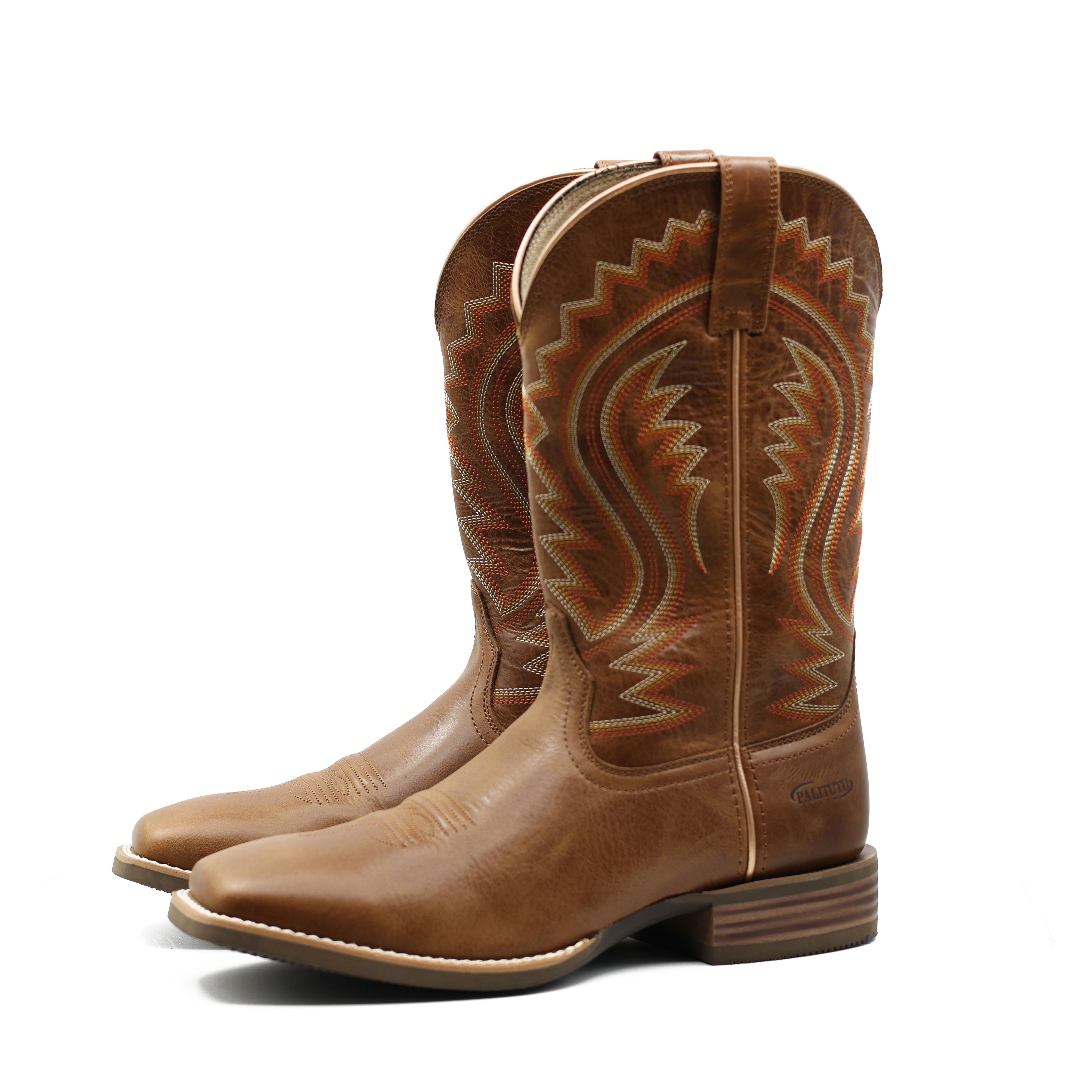
Every Western boot begins with a careful understanding of its materials.
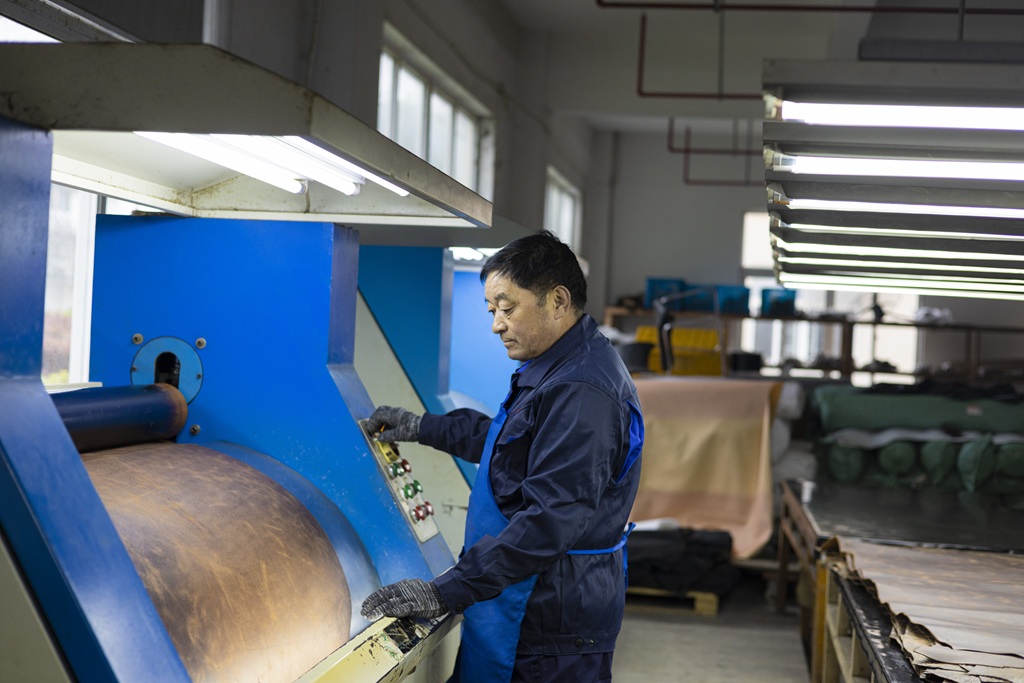
Unlike synthetic materials, natural leather has its own character. Differences in grain patterns, thickness, flexibility, and surface condition are part of what makes each hide unique. Before cutting and assembly, manufacturers need to evaluate these features to prepare the material properly.
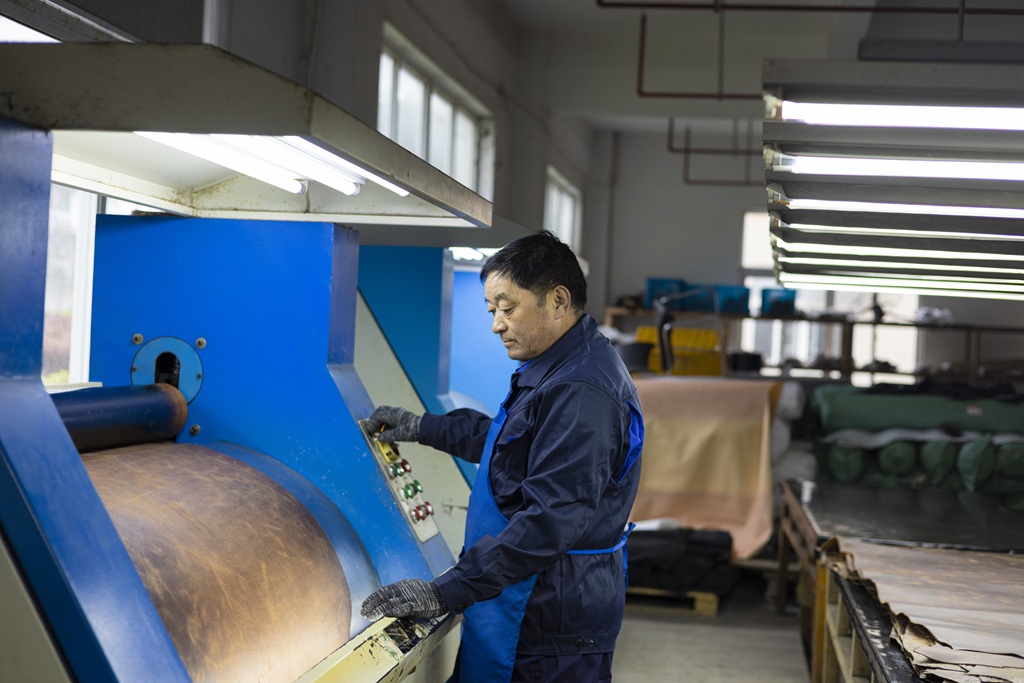
The image shows a leather inspection process at Jiangsu Yibei Industry Co., Ltd. During this stage, workers examine leather conditions with the support of production equipment and practical experience. The inspection focuses on surface quality, thickness consistency, and characteristics that may influence later manufacturing steps.
Leather inspection is not simply a process of accepting or rejecting material. It is also about understanding where and how each section of leather can perform best. Areas with greater flexibility may be suitable for sections requiring more movement, while areas with stable structure may be selected for important upper components.
After inspection, leather is organized according to its characteristics and prepared for cutting and production. Proper material evaluation helps reduce unnecessary adjustments during later processes and allows the natural qualities of the leather to be considered during manufacturing.
At Jiangsu Yibei Industry Co., Ltd., leather inspection serves as an important connection between raw materials and craftsmanship. By understanding each material before production begins, the team can better coordinate cutting, stitching, and shaping processes while maintaining the intended character of every Western boot design.
 +1(313)896-6743
 New technology companies

 Follow the official account
 Follow the official account